

Recent Blog Posts
Understanding Equitable Distribution in an Illinois Divorce
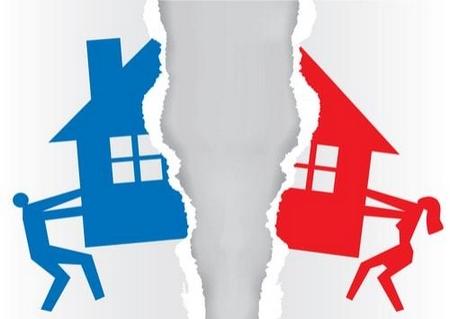 When a couple gets divorced, everyone "knows" that each spouse is entitled to half of everything the couple owns, including the property that each party brought with them into the marriage. This idea is repeated as fact in countless movies, television programs, and informal advice forums. Such an assumption, however, about how property is divided in a divorce is, at best, misguided and, at worst, completely inaccurate-at least in the state of Illinois.
Equal Division Is Not Guaranteed
Illinois is known as an equitable distribution state when it comes to dividing property in a divorce. Equitable is not the same as equal, and the distinction is very important. The principles of equitable distribution-and Illinois law-require marital property to be divided in a manner that is fair and just. To determine what is fair and just, the circumstances of the marriage, divorce, and expected post-divorce situation must be taken into account.
Can Police Search Your Phone?
 Imagine police pulled you over in a traffic stop. Maybe they suspect you of a DUI, or maybe they want to cite you for having a broken taillight. Whatever the reason, they approach your window and begin to question you. They may even become aggressive and demand that you hand over your phone. Perhaps they even order you to unlock it for them or provide them with your password. This is a scary situation, as everyone has personal and confidential information on their phones these days. The question is, are police allowed to search your phone?
U.S. Supreme Court Decides on Cell Phone Searches
In 2014, the U.S. Supreme Court heard the case of Riley v. California. The defendant had been stopped by police for expired registration tags on his vehicle. During the stop, the officer also learned that the defandant’s driver’s license was suspended and that he was carrying a number of firearms in his car. The officer also took his phone, which the officer claimed had further incriminating evidence on it.
How Life Insurance Can Be Used as Security in a Divorce Case
 For many individuals, it takes a divorce to realize just how financially dependent a person may be on his or her spouse. This, of course, may be all the more true if you are also trying to raise children. It is for exactly such reasons that the divorce laws in Illinois include provisions for spousal maintenance and child support. These orders are issued, when appropriate, by the court to distribute the financial burden more equitably between you and your ex-spouse. But, what would happen if your ex-spouse was no longer around to provide support for you or your children? Would you be able to get by? If the answer is no, you may want to speak with family law attorney about including life insurance requirements in your divorce agreement.
Why Life Insurance?
A life insurance policy is designed to pay financial benefits to the named beneficiaries of a policyholder upon the policyholder’s death. These funds are often used to cover funeral costs, pay down debts, or to simply maintain a similar lifestyle. Married individuals will commonly name their spouse as the primary beneficiary to help provide a level of security in the event of their death.
Penalties for Ecstasy Possession in Illinois
 Ecstasy is often known as a party drug, but it is a substance that is illegal under Illinois’ drug laws. It also carries some of the harshest penalties for those convicted. The drug was blamed for causing an epidemic in Illinois in 2002, as it was said to have been responsible for a number of teenage deaths. It has also been called a growing threat to youth all around the country. It is because ecstasy is considered so dangerous that law enforcement and the prosecution here in Illinois take it so seriously.
Anyone accused of ecstasy possession should understand what penalties they are facing if they are convicted, and the importance of speaking to an Illinois criminal defense lawyer.
What Is Ecstasy?
Today MDMA, the technical name for ecstasy, is on Schedule I of the Controlled Substances Act. Drugs appearing on this schedule are thought to have a high potential for abuse and no currently accepted medical use.
Questioning of a Minor Without Parents or an Attorney
 When your child has been arrested for an offense such as underage drinking, the situation can be terrifying. One of the most frightening aspects of this scenario for parents is learning that their child was questioned by police without an attorney, and without either parent being present. So, what does the law say in Illinois about questioning a minor? Are police officers required to ensure the parents or the child’s attorney is present?
What Is the Definition of a Minor?
Under the Juvenile Court Act of 1987, individuals 18 years old or younger are considered minors in Illinois. Even minors charged with a felony are still considered juveniles and are tried in juvenile court. However, if the court views the crime as especially heinous, a juvenile may be transferred and tried in adult court. This process typically only applies to violent offenses such as murder and rape.
How Long Can Law Enforcement Detain a Minor?
How Could Domestic Abuse Affect Parental Rights?
 Domestic abuse is a serious problem in this country. According to the National Coalition Against Domestic Violence, 10 million women and men are abused by a romantic partner every year. This works out to an average of almost 20 incidents every minute. Many of the couples affected by domestic violence have children. In fact, one in every 15 children are exposed to intimate partner violence each year. Children are deeply affected by witnessing domestic violence, and exposure to it may cause them serious anxiety, fear, sadness or even guilt.
In Illinois parental responsibility proceedings-formerly called child custody-every effort is made to make decisions which are in the child’s best interest. Therefore, most courts will not order a child to live with or have visitation with a consistently abusive parent. However, if this abuse is not known to the court or is not documented, the courts may allow arrangements that place the child in danger. This is why it is important for each parent to notify the court about any issues involving either parent that relate to domestic violence or protective orders.
Challenging Breath Test Results in Illinois
 Under Illinois’ implied consent laws, if you are pulled over for a DUI, you must submit to a breath test if asked by an officer. After the breath test, the officer will tell you what your blood alcohol content (BAC) is, and if you blew over 0.08, which is the legal limit. If you did, the situation may seem hopeless. However, there are ways to challenge these tests and get them thrown out of court, which can be very helpful to your case.
The Results Were Inconsistent
If you blow into a breathalyzer many times and get significantly different readings, it indicates that the machine is not reliable. Some judges have even deemed certain brands as being notoriously unreliable. Additionally, breath tests must be performed until two successive results fall within 0.020 percent of each other. If this range cannot be reached, a judge may determine that the tests are inconclusive.
The Officer Did Not Administer the Test Correctly
What Are Defenses to Reckless Driving in Illinois?
 In Illinois, any extremely dangerous driving behavior that puts the safety of others at risk is considered reckless driving. Excessive speeding, tailgating, and changing lanes often and suddenly are all considered forms of reckless driving. This is a very serious offense for those charged in Illinois, and it could even result in jail time. As such, it is important that those accused speak to an Illinois criminal defense attorney that can help prepare a proper defense. Below are some of the tactics a defense attorney may use.
Lack of Intent
To be successful in a reckless driving case, the prosecution must show that the defendant intended to drive recklessly. Intent is difficult to prove in any criminal case because it is challenging to show what a person was thinking at a specific point in time.
In some cases, the original charges do not specifically state that a driver was driving recklessly. A traffic ticket, for example, may only say that the driver was negligent. This is a lack of specificity, and it opens the door for a defense attorney to ask for a Bill of Particulars.
What Does Timing Have to Do With a Dissipation Claim?
 In a divorce proceeding, the couple must reach an agreement about how they will divide their marital property, or the court will step in and divide the marital estate for them. If the court gets involved, there are numerous statutory factors that will be considered, including any claims of dissipation filed by either spouse.
Dissipation refers to the spending of marital assets inappropriately-namely, for purposes unrelated to the marriage. When a claim of dissipation is filed, it is essentially a request for the spent assets to be repaid to the marital estate so that the property division process can be completed equitably. While the type of spending is an important consideration in a dissipation claim, the timing of the spending mattes as well.
Understanding Dissipation
The Illinois Supreme Court has defined dissipation as the use of marital assets by one spouse for his or her own benefit rather than that of the marriage. Dissipation claims are common in divorce cases where a spouse has spent large amounts of money on alcohol, drugs, gambling, foolish investments, or adulterous affairs. In certain situations, dissipation could also include destroying or failing to maintain a marital asset, such as an investment property. This type of dissipation is a problem because it can dramatically reduce the overall value of the couple’s marital estate.
When Is it Illegal to Possess Prescription Drugs in Rolling Meadows?
 When most people think of criminal drug charges, they often think of those relating to hard street drugs, such as cocaine, meth, and heroin. However, did you know that even if you have a prescription for a drug, you could still face criminal charges under certain circumstances?
In Illinois, there are many offenses associated with prescription drugs, and many residents are not aware of that fact. For this reason, too many people are charged by overzealous law enforcement. When they are, they often do not know what to do. The first step to take is to speak to a Rolling Meadows criminal defense attorney.
Illinois Law on Prescription Drugs
Under the Illinois Compiled Statutes, there are certain offenses related to prescription drugs that have serious consequences. The statutes stipulate that it is against the law to manufacture, distribute, or possess controlled substances, including prescription drugs. The most common of these drugs fall within Schedules 2 and 4 and include:

Schedule Your Free Consultation
Arlington Heights Office 3030 Salt Creek Lane, Suite 120 Arlington Heights, IL 60005 Phone: 847-253-3100


At Cosley Law Office, we represent clients throughout Illinois, including Arlington Heights, Barrington, Buffalo Grove, Des Plaines, Elk Grove Village, Glenview, Hoffman Estates, Inverness, Long Grove, Mount Prospect, Mundelein, Northbrook, Palatine, Prospect Heights, Rolling Meadows, Schaumburg, Schiller Park, Wheeling, and Wood Dale, as well as Cook County, Lake County, DuPage County, and throughout the Chicago, IL metropolitan area.
Results listed are not a guarantee or indication of future case results.

© 2026 Cosley Law Office
3030 Salt Creek Lane, Suite 120, Arlington Heights, IL 60005
847-253-3100